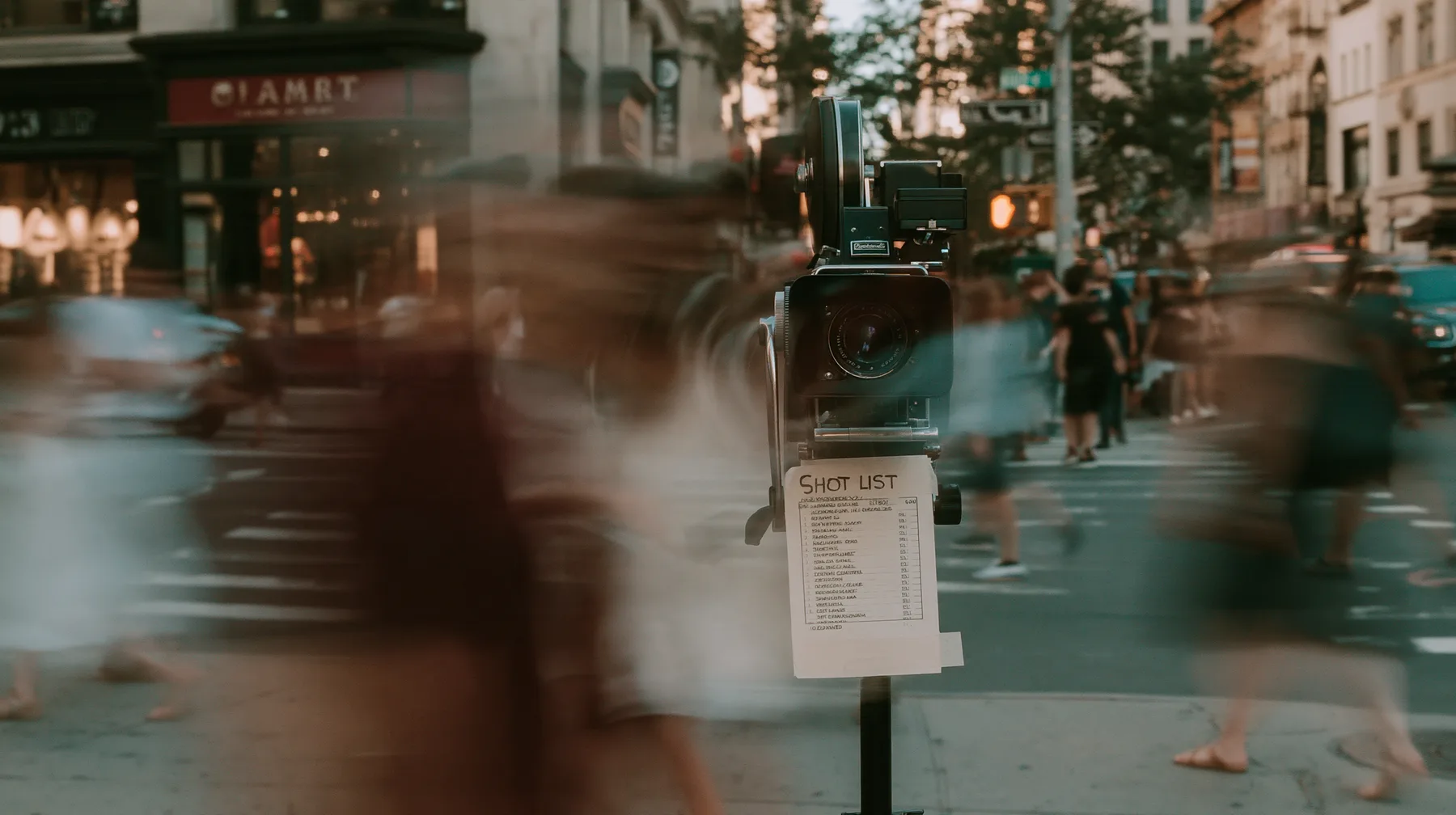
A shot list is a checklist of every shot you need to film, written out scene by scene in the order you plan to shoot them. It turns the script into a plan the whole crew can follow, and it is the single most useful document you can bring to set after the script and the schedule.
This guide shows how to build one from scratch, which columns are worth keeping, and gives you a template to copy and a worked example you can adapt. If you are still planning your production more broadly, the pre-production software guide covers tools that can generate shot lists for you.
What a shot list actually does
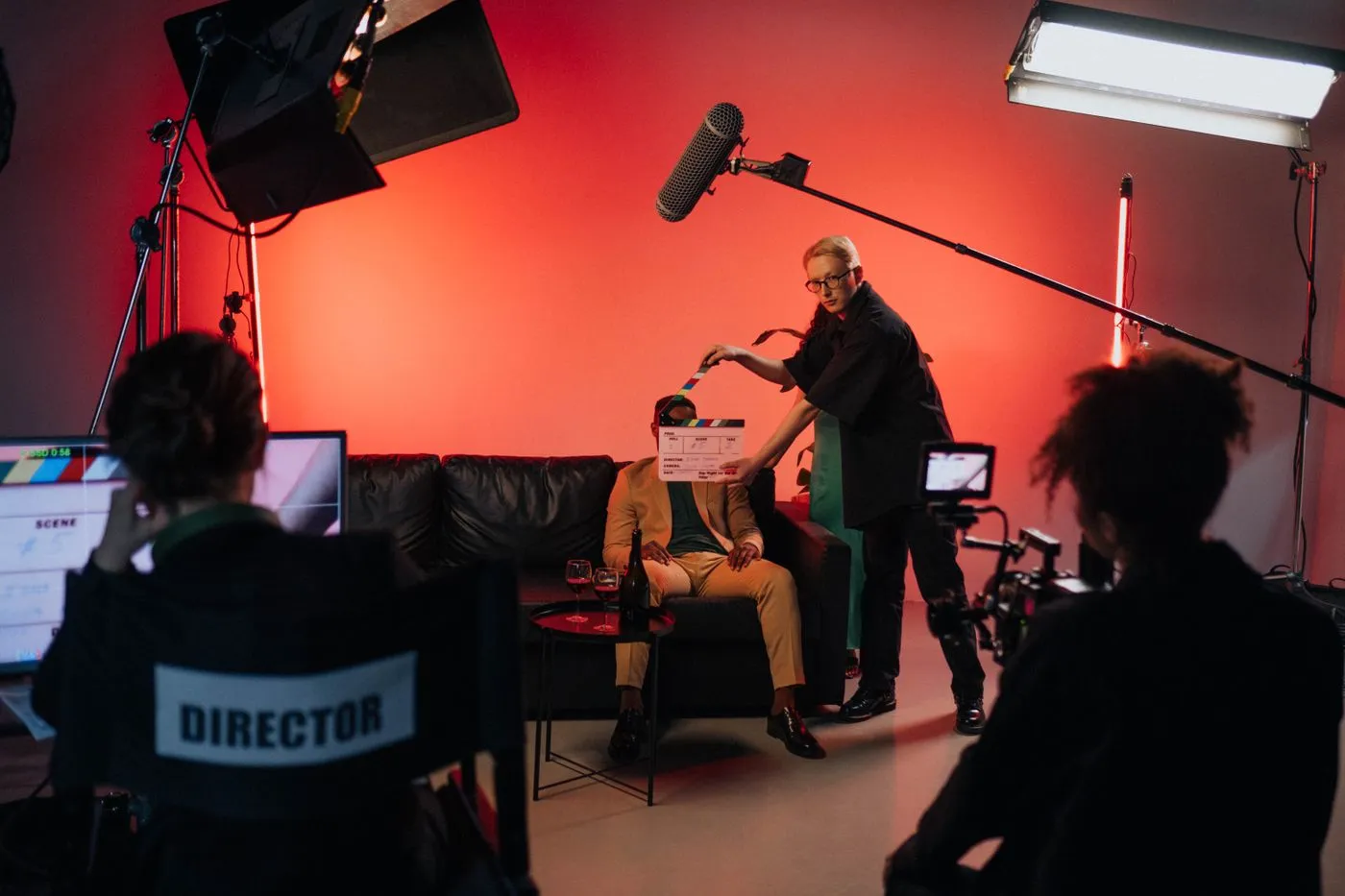
On a no-budget shoot you will never have enough time. A shot list does three jobs when time is short:
- It tells the crew what is coming. The camera operator, gaffer and sound recordist can prepare the next setup while you shoot the current one.
- It protects the shots that matter. When the light is fading, you already know which shots the edit cannot live without.
- It makes your schedule honest. Every setup takes time, so counting setups gives you a far better estimate of the day than counting script pages.
Shot list vs storyboard
They are often confused. A storyboard is a drawn picture of each frame. A shot list is a table of text that describes each shot and its technical details. A storyboard helps you and your cinematographer agree on how a shot looks. A shot list helps the crew execute it and helps the first assistant director build the schedule. If you can only make one, make the shot list.
How to make a shot list, step by step
1. Break the script into scenes
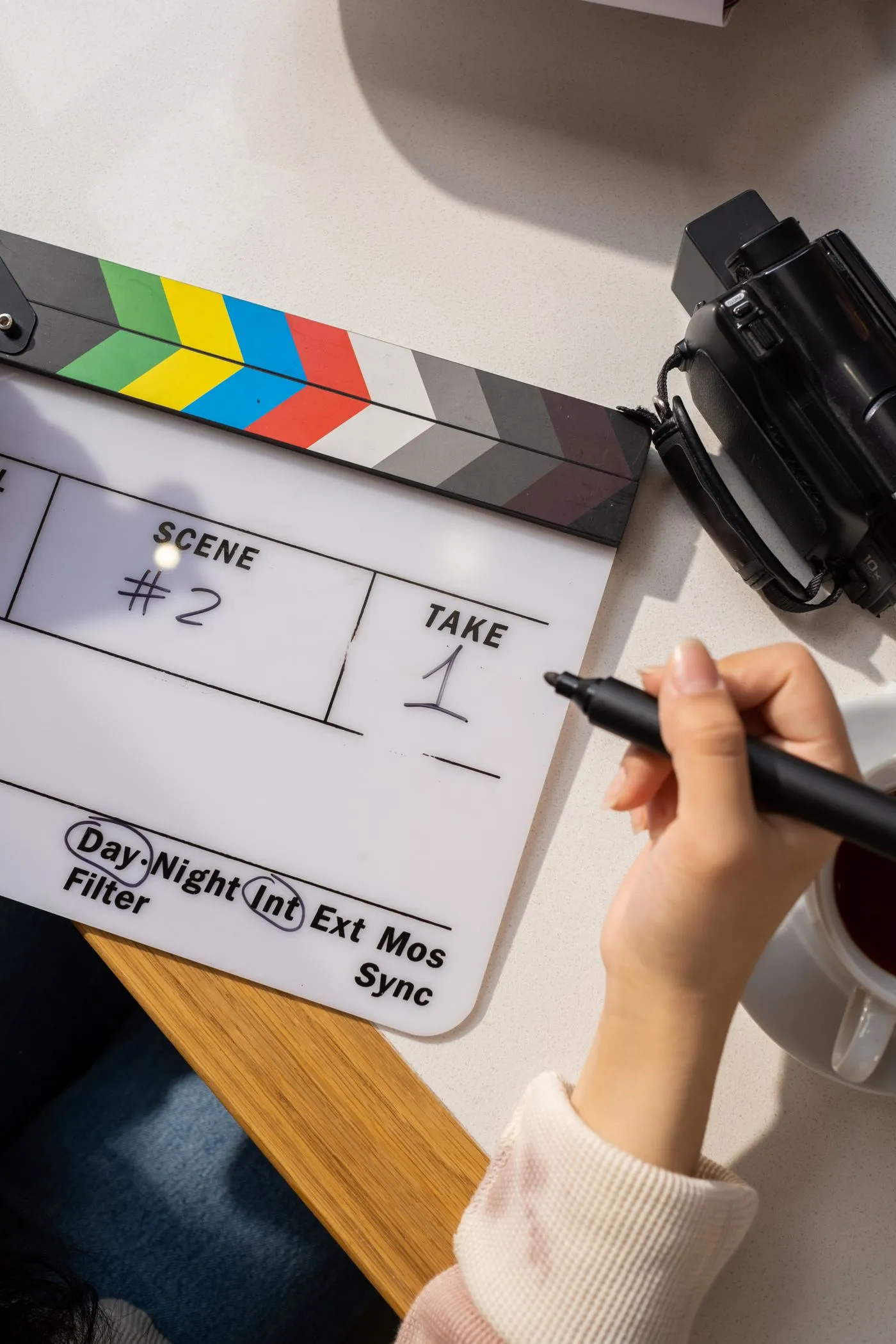
Read the screenplay and number every scene. Note the location, whether it is interior or exterior, and the time of day. These details drive everything that follows, because they decide where you are, what light you have and how long you can stay.
2. Decide how each scene should feel
Before you list a single shot, ask what the scene is meant to do to the audience. A tense argument, a quiet reunion and a chase all call for different coverage. Write one line per scene describing the intent. The shots you choose should serve it.
3. List the shots each scene needs
Walk through each scene in your head, line by line, and write down what the audience needs to see at each moment. Start with the establishing shot or master, then add the angles that give the edit options: closer shots on the characters, reaction shots, inserts of important objects. If you need a refresher on the vocabulary, the camera movements guide explains the common moves.
4. Add the technical details
For each shot, record the shot size (wide, medium, close-up), the angle (eye level, low, high), any camera movement (static, pan, dolly, handheld) and the lens you plan to use. You do not need to over-specify. Your cinematographer will refine these choices on the day.
5. Reorder the list for shooting, not for story
This is the step beginners skip. Scripts run in story order, but you shoot in whatever order is most efficient. Group every shot at the same location together. Within a location, group shots that share the same lighting setup and camera position. Finish one side of a conversation before you turn the lights around to the other.
6. Mark the priorities
Put a star beside the shots you cannot do without. If the day runs over, you will know exactly what to protect and what to drop.
The columns that matter
You can build a shot list in a spreadsheet, a document or dedicated software. Whatever you use, these columns cover almost every production:
| Column | What goes in it |
|---|---|
| Shot # | A running number, with letters for pickups (12, 12A) |
| Scene | The scene number from the script |
| Setup | Which lighting and camera setup the shot belongs to |
| Size | Wide, medium, close-up, extreme close-up |
| Angle / movement | Eye level, low angle, over the shoulder, static, dolly, handheld |
| Lens | Focal length you intend to use |
| Description | What happens in the frame, in plain words |
| Notes | Props, actors in frame, sound needs, must-have flag |
Add or remove columns to suit your project. A documentary might not need a lens column, while a project with a lot of actors might want a column for who is in frame. Keep it as simple as you can. A shot list nobody reads is worse than none.
A free shot list template you can copy
Copy this table into any spreadsheet or document and fill it in for your own scenes.
| Shot | Scene | Setup | Size | Angle / Move | Lens | Description | Notes |
|---|---|---|---|---|---|---|---|
| 1 | |||||||
| 2 | |||||||
| 3 | |||||||
| 4 | |||||||
| 5 |
Tip: add one extra column called "Done" and tick it off during the shoot. It sounds trivial, but it is the reason a shot list works as a checklist instead of just a plan.
Shot list example: a kitchen scene
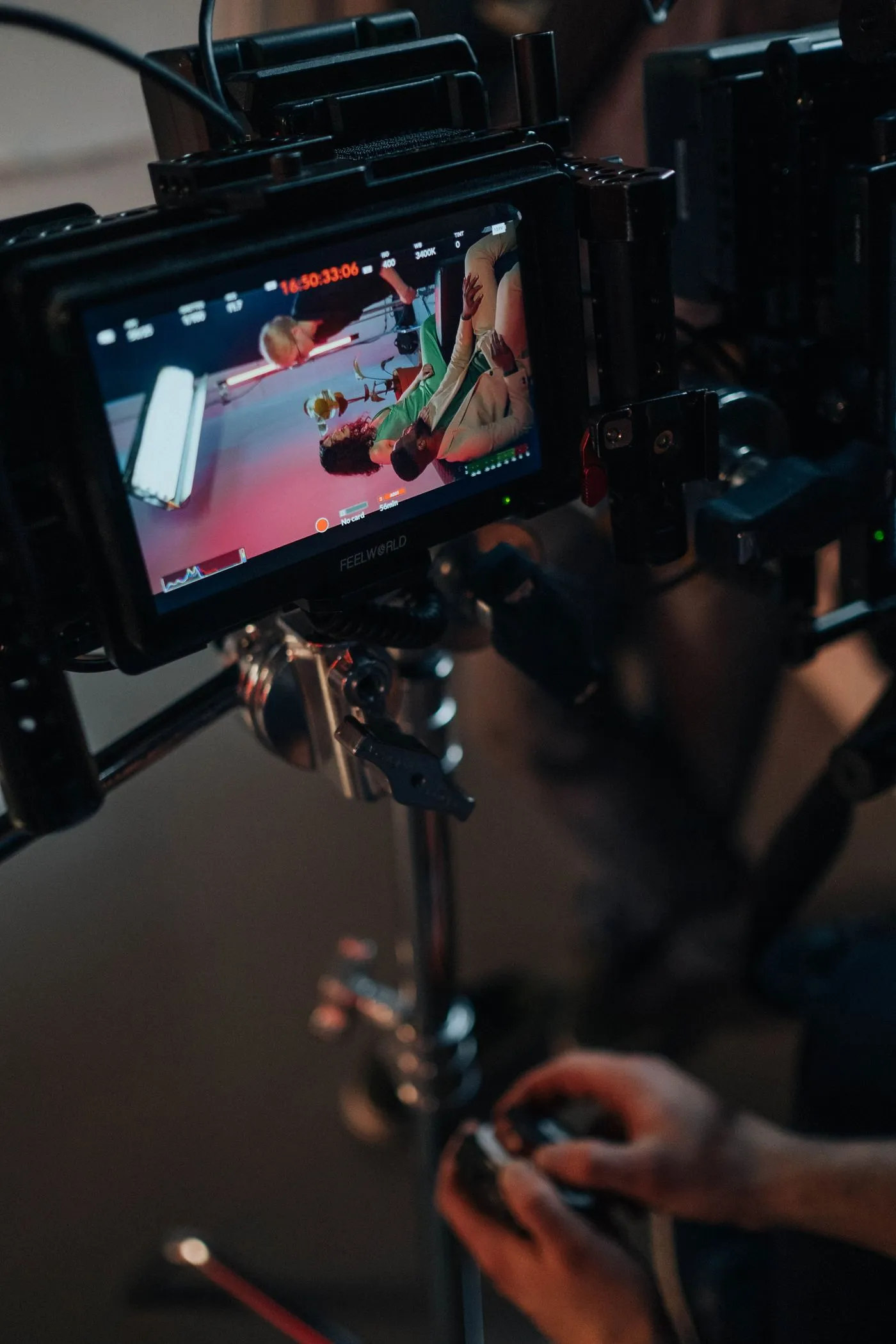
Here is a worked example for a short, simple scene. Scene 4: Interior kitchen, night. A woman sits at the table with a letter. Her brother comes in and she hides it. The scene is about secrets, so the coverage keeps the two characters visually separate until the end.
| Shot | Scene | Setup | Size | Angle / Move | Lens | Description | Notes |
|---|---|---|---|---|---|---|---|
| 4A | 4 | A | Wide | Static, eye level | 24mm | Both characters in the kitchen, her at the table, doorway at back | Master. Cover whole scene first. |
| 4B | 4 | B | Close-up | Static, slightly low | 50mm | Her hands fold the letter under the table | Insert. Must-have. |
| 4C | 4 | C | Medium | Over the shoulder | 35mm | Brother enters, speaks to her | Her back to camera |
| 4D | 4 | D | Medium close-up | Eye level | 50mm | Her face as she answers, forcing calm | Must-have. Reaction carries the scene. |
| 4E | 4 | D | Close-up | Slow push in | 85mm | Her eyes drop to the hidden letter | Optional. Cut if short on time. |
Notice how shots 4D and 4E share a setup. You light and place the camera once, then get both. That is how a shot list saves you time: you do the work that is already set up before you move.
Common mistakes
- Planning shots you cannot afford. A crane move looks great on paper but costs time you may not have. Match the list to your resources.
- Shooting in story order. Group by location and lighting, as above.
- No coverage for the edit. Always capture a wide, a medium and a close version of important moments, plus a few cutaway inserts. Your editor will thank you.
- Forgetting sound. Add a note for wild lines, room tone and any shot where a boom or lav will be difficult to hide.
- Treating it as untouchable. Locations change and actors surprise you. Adjust the list on the day. It is a plan, not a contract.
If you are shooting on a tight budget, the guerrilla filmmaking guide covers how to adapt your plan when you cannot control the location.
Tools for building a shot list
You can make a perfectly good shot list in Google Sheets or Excel. Dedicated software adds features like drag-and-drop reordering, storyboard panels and automatic scheduling, but it is not required. Start with the template above, and move to software when your projects grow large enough that managing the spreadsheet slows you down.
Final thoughts
A shot list does not have to be elaborate. A single page of clear, ordered shots is enough to keep a crew moving and to make sure you come home with the footage the edit needs. Break your script into scenes, list the coverage, group it for efficiency, mark the must-haves, and bring it to set. The more you use one, the faster you will build them, and the less time you will spend wondering what to shoot next.
Frequently asked questions
What is a shot list?
A shot list is a document that breaks every scene of a film into the individual shots you plan to capture, with details like shot size, camera angle, movement and lens. The crew uses it on set as a checklist.
What is the difference between a shot list and a storyboard?
A storyboard draws what each shot looks like. A shot list describes each shot in words and columns so it can be scheduled and ticked off. Many filmmakers use both, but only the shot list is essential.
How many shots should a scene have?
There is no fixed number. A simple dialogue scene might need a wide shot plus a few angles on each speaker, while an action scene can need dozens. Plan the coverage the scene needs and the time you actually have.
Do I need a shot list for a short film?
It is strongly recommended. Even a basic list stops you leaving a location without a key shot, and it makes your schedule more realistic.